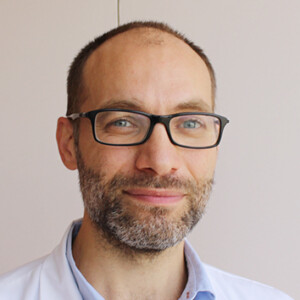
Raphael BORIE
Coordinator, Pulmonologist
Bichat – Claude Bernard Hospital, Paris

The FHU INFIRE – INnovation Fibrosis Inflammation REmodeling is a Hospital-University Federation accredited for 2025–2029 by AP-HP, Inserm and the universities of the Île-de-France region. Led by Prof. Raphaël Borie, Dr. Camille Cohen and Prof. Grégory Ducrocq at Bichat Hospital, the FHU INFIRE brings together clinicians, researchers, educators, patients and industry partners around a shared objective: to better understand, prevent and treat chronic diseases linked to inflammation, tissue remodeling and fibrosis.
Tissue remodeling lies at the heart of many chronic diseases (lung, kidney, heart, etc.), often leading to organ failure.
Inflammation, as a major trigger, can induce fibrosis, often associated with a poor prognosis.
Today, no national consortium brings together expertise around this cross-cutting process. This is where the FHU INFIRE positions itself, by creating an interdisciplinary platform to combine perspectives and turn knowledge into practical solutions.
Our approach: integrative, translational and innovation-driven.
The FHU INFIRE is built around 6 major structuring pillars:
Collaboration between nephrologists, pulmonologists, cardiologists, rheumatologists, immunologists, pediatricians, etc.
to transfer knowledge from the laboratory to the patient’s bedside.
a key lever to initiate and strengthen partnerships with the pharmaceutical industry.
focused on patients with chronic inflammation and/or fibrosis to improve understanding of the mechanisms involved in these conditions.
advanced imaging, biomarkers, targeted therapies.
The FHU will be a key step toward creating a more ambitious structure, such as an IHU (Hospital-University Institute).
Our ambition: to advance early diagnosis, identify therapeutic targets, and improve patient care.
A Hospital-University Federation (FHU) is a structure that brings together hospital, university and research teams around a shared healthcare project. Its aim is to foster collaboration between clinicians, researchers and educators in order to accelerate innovation and improve care.
An FHU makes it possible to address a medical theme in a comprehensive way, combining basic research, clinical research, training and patient care. It therefore promotes the rapid transfer of scientific discoveries into medical practice.
The missions of FHUs are to:
support innovative research projects,
develop clinical studies,
strengthen the training of healthcare professionals,
encourage the sharing of expertise and data,
improve the coherence of the care pathway.
Each FHU relies on scientific governance, a steering committee and interdisciplinary working groups organized around themes or specific projects. This organization fosters the emergence of more collaborative, innovative medicine focused on patients’ needs.
Fibrosis is a pathological process characterized by an excessive accumulation of scar tissue in an organ. It occurs when normal repair mechanisms become excessive or uncontrolled, most often in response to chronic inflammation, repeated injury or certain diseases.
During this process, cells called fibroblasts overproduce components of the extracellular matrix, notably collagen. Gradually, normal tissue is replaced by tissue that is stiffer and less functional, which can impair the function of the affected organ.
Depending on the organ involved and the severity of the condition, symptoms can vary widely: shortness of breath, fatigue, pain, loss of organ function, or cardiovascular complications.
Fibrosis can occur in different contexts:
inflammatory or autoimmune diseases,
chronic infections
aging
genetic factors
exposure to toxins or certain medications
metabolic or cardiovascular diseases
Fibrotic diseases represent a major public health issue. Often chronic and progressive, they can have a significant impact on quality of life and require specialized, multidisciplinary care.
Despite recent progress, many mechanisms involved in the development of fibrosis remain poorly understood, which limits the therapeutic options available.
The FHU INFIRE brings together clinicians, researchers and experts from different disciplines to better understand the mechanisms of inflammation, fibrosis and tissue remodeling.
Its objective is to develop innovative translational research to improve diagnosis, identify new therapeutic targets, accelerate the transfer of discoveries into care, and strengthen training around fibrotic diseases.
Fibrotic diseases result from complex interactions between inflammation, tissue remodeling, genetic factors and environmental factors. To better understand these mechanisms and accelerate the development of new diagnostic and therapeutic approaches, the FHU INFIRE is based on 5 interconnected work packages, bringing together clinical, biological and technological expertise:
Identification and validation of new biomarkers for the early diagnosis of fibrotic diseases.
Leads: François Rouzet, Grégory Ducrocq, Fabrice Extramiana
Development of innovative approaches to identify early events that trigger the inflammation–remodeling–fibrosis axis across different organs
Leads: Marc Clément, Camille Cohen, Camille Taillé
Identify the links between these genes, inflammation, and the development of fibrosis, as well as their interaction with the genetic causes of cardiac channelopathies, from birth to adulthood
Leaders: Raphaël Borie, Caroline Kannengießer, Pierre-Antoine Juge, Philippe Dieudé, Nadia Nathan, Guillaume Jondeau
Establish a preclinical drug screening platform
Leaders: Marina Urena Alcazar, Philippe Gabriel Steg
Develop a cross-disciplinary competency framework on fibrosing diseases, and propose specific therapeutic education modules according to the affected organ
Leaders: Emmanuelle Vidal-Petiot, Justine Frija, Lucie Cabrejo
Our team is composed of recognized experts in their respective fields















Explore our research projects, scientific publications, and upcoming events.